
2026 Ford F-150 vs the 2026 Toyota Tundra: Why the F-150 is America’s Favorite Full-Size Truck
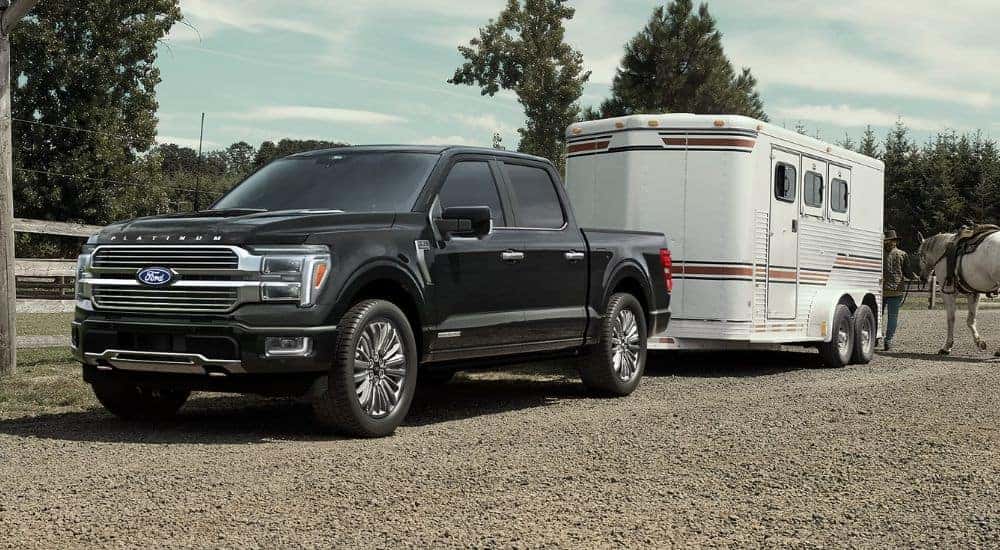
Full-size pickup trucks are as much a part of American life as baseball, hot dogs, and apple pie. Originally developed for hard work, full-size trucks offer outstanding towing and payload capacity, stellar on- and off-road performance, and unmatched durability. Modern pickups have gone a step beyond the truck’s utilitarian roots, incorporating high-end comfort and innovative technology to improve the driving experience. Two of the top-selling full-size trucks in America, the Ford F-150 and the Toyota Tundra, both offer these features, making them popular among drivers who need a truck’s versatility for work, families who want extra room and world-class safety, and outdoor enthusiasts who regularly pull a boat or ATV in pursuit of adventure.
While both the F-150 and Tundra have dedicated followings, there are compelling reasons that many drivers opt to purchase a Ford F-150 for sale near San Lorenzo after comparing the two trucks. Though both trucks are built with quality materials and offer cargo and towing capability, the F-150 stands above the Tundra on many key metrics, which explains why the F-150 has been America’s best-selling full-size truck for nearly half a century.
Towing and Payload
The original purpose of the full-size truck was to provide a light-duty vehicle capable of carrying loads too big for a sedan, too cumbersome for a van, and too small to necessitate a larger commercial truck. The versatility of the pickup has made it a fixture of the American workplace, whether driving to a construction jobsite, hauling payloads on a farm, or extending services as part of commercial fleets. Because of the focus on hard-working capability, it’s no wonder that towing and payload capacity are top concerns for potential full-size truck buyers.
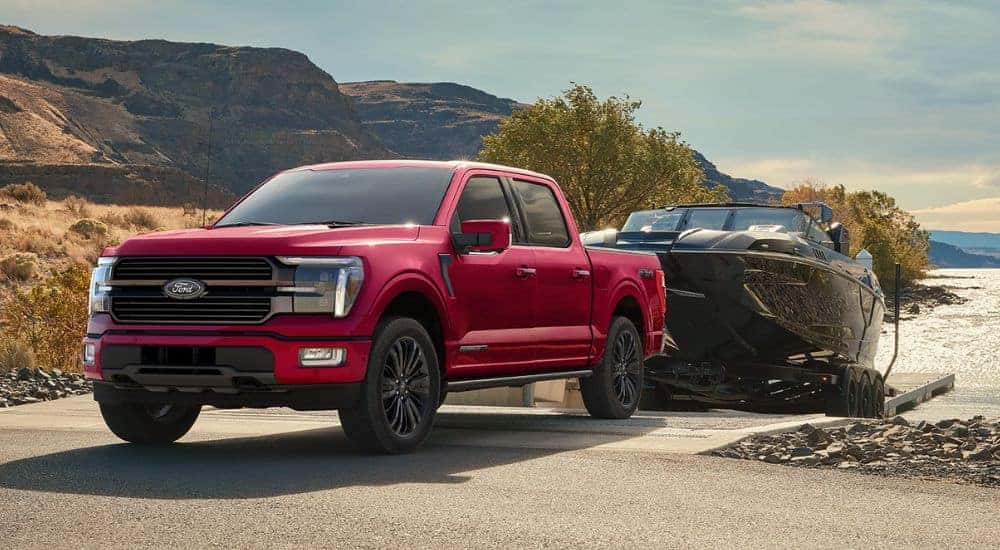
In terms of towing capacity, the F-150 is the clear winner over the Tundra. When properly equipped, the 2026 F-150 boasts superior towing power, as it’s rated for a maximum capacity of up to 13,500 pounds. That exceeds the 2026Tundra’s maximum towing capacity of 12,000 pounds by a significant margin, giving the F-150 a head-to-head advantage, whether you plan to use your truck to pull heavy equipment to the next jobsite or routinely trailer your fishing boat to the nearest body of water.
Properly-equipped F-150s also hold the advantage in payload capacity, with a maximum payload capacity of up to 2,440 pounds, compared with the 2026 Tundra’s 1,940-pound maximum payload capacity. The F-150 even bests the Tundra in cargo bed width in most bed length configurations. Both the 2026 Tundra’s and the 2026 F-150’s beds offer enough width to allow standard sheets of plywood to lie flat for better loading, but the F-150 gives you a little more wiggle room with 50.6 inches between the wheelwells, compared to the Tundra’s 48.7 inches.
The F-150 is the clear winner in towing and payload capabilities when compared to the Tundra, offering San Lorenzo drivers more hard-working ability and awe-inspiring versatility.
Powertrain and Trim Level Variety
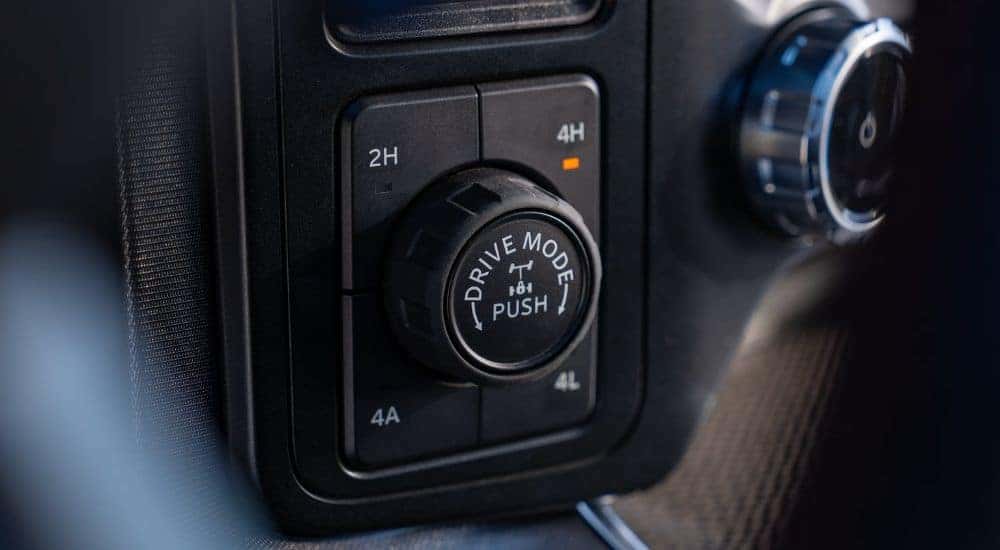
The F-150 offers drivers near San Lorenzo a wider range of engine options than the Tundra, giving it the upper hand in versatility and custom-fitted, purpose-driven capability. The Ford F-150 also offers a wider variety of specialized trim levels than the Tundra. Not every driver needs a truck loaded with luxury features and technology, and some truck drivers want more than a base-level work truck. The F-150’s lineup of engines gives buyers more options and more opportunities for customization so that the truck’s capabilities can be matched to its intended usage.
The F-150 lineup of light-duty trucks includes six powertrain options that bridge the needs of drivers from all walks of life. For drivers who prioritize efficiency, there’s the 2.7-liter V6 EcoBoost, which produces 325 horsepower and 400 lb-ft of torque, as well as the 3.5-liter PowerBoost Hybrid V6, which delivers 420 horsepower and 578 lb-ft of torque. There’s also the time-tested 5.0-liter Ti-VCT V8 that produces 400 horsepower and 410 lb-ft of torque. Ford’s excellent 3.5-liter EcoBoost is available in two incarnations, including the standard 382-horsepower version and the 450-horsepower High-Output edition found in the Raptor trim. Finally, there’s even the Raptor R’s incredible 5.2-liter Supercharged V8 that generates a mind-blowing 720 horsepower and 640 lb-ft of torque.
By comparison, the Tundra only offers two engine options. The standard powerplant is a 3.4-liter turbocharged i-FORCE V6 that produces up to 389 horsepower and 479 lb-ft of torque, as well as the i-FORCE MAX Hybrid engine that creates 437 horsepower and 583 lb-ft of torque. The F-150 simply offers more powertrain diversity than the Tundra, allowing drivers to better match their engine to the truck’s intended purpose.
In terms of trim variety, the 2026 Tundra offers seven main trims while the 2026 F-150 offers eight. The trim lineup of the F-150 offers more diversity, especially when it comes to specialized features. For example, the XL trim is specifically built for hard work, with minimalist features and no-nonsense practicality. The XLT and Lariat combine performance, capability, and comfort, with some convenience and luxury features included for a better driving experience. Drivers who want total luxury can opt for the top-of-the-line Platinum trim or the branded King Ranch, both of which are loaded with quality materials, cutting-edge tech, and maximum comfort. Off-road aficionados can opt for the terrain-capable but affordable Tremor trim, or the maximum speed and all-terrain prowess of the Raptor or Raptor R.
Fuel Efficiency
Another key consideration when comparing the F-150 and the Tundra is the respective fuel efficiency of each truck. While both truck lines offer hybrid options that help offset fuel usage and extend mileage per tank of gas, the F-150 once again has the clear advantage over the Tundra.
For example, the base trim F-150 with the 2.7-liter engine has an EPA-estimated fuel efficiency of 19 MPG in the city and 25 MPG on the highway, besting the Tundra’s ratings of up to 18 MPG in the city and up to 23 MPG on the highway. The Tundra’s hybrid powerplant also falls short of the mileage rating for the F-150 hybrid, as the latter boasts an estimated fuel economy of 22 MPG in the city and 24 MPG on the highway, compared to the Tundra’s 20 MPG in the city and 24 MPG on the highway. The F-150 provides high-level fuel efficiency when compared to the Tundra, and it does that without a noticeable difference in horsepower and torque production.
The F-150 Is Still America’s Favorite Full-Size Truck, for Good Reason
When the 2026 F-150 and 2026 Tundra are compared head-to-head, it’s easy to see why so many San Lorenzo drivers prefer the American-made quality, capability, and versatility of Ford’s full-size flagship. The F-150 simply offers drivers more trim variety, more high-quality powertrain options, better fuel efficiency, and enhanced capabilities. No matter how you plan to use your new truck, the F-150 has the traits and features to help you get the job done. Whether you need a dependable work truck that can tackle any task, a family-friendly vehicle for suburban commutes, or an off-road machine that can conquer any obstacle, there’s an F-150 that perfectly aligns with your needs.
0 comment(s) so far on 2026 Ford F-150 vs the 2026 Toyota Tundra: Why the F-150 is America’s Favorite Full-Size Truck