Leading the Way for Safer Travels: Ford’s Safety Innovations
May 10 2024 - admin@wikimotive.com
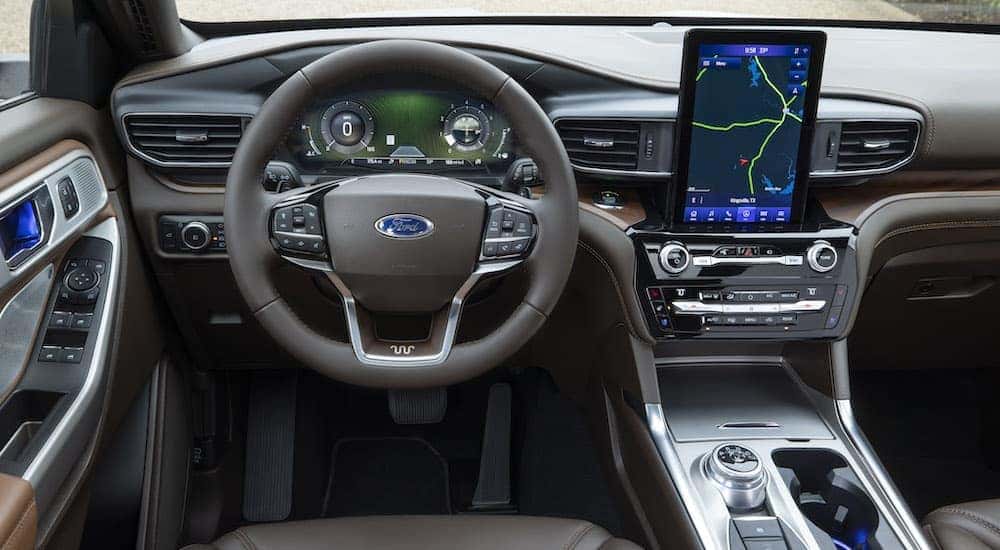
 As one of the leading manufacturers in the automotive industry, Ford has always been known for keeping its finger on the pulse of what drivers are looking for in transportation. As the SUV boom began to take off in the early 2000s, many shoppers looked to Ford as SUVs for sale became more accessible and tailored to the needs of the average driver. The popularity of models such as the Explorer and Escape proved that the SUV could be utilized as the ideal form of family-oriented transportation. As such, Ford has continued to develop safety and driving assistance features that push the boundaries and provide oversight and an added layer of protection where it matters most.
One of the first notable safety features Ford developed for its fleet of SUVs was AdvanceTrac roll stability control. Introduced in the early 2000s, this early innovation was designed to provide more control over the vehicle in various road conditions and prevent vehicle rollovers. The technology began developing in the 1990s, and it was a significant breakthrough when it was implemented on the Ford Explorer. Not only did the feature help drivers maintain traction, but it also featured an anti-lock braking system and yaw control.
As one of the leading manufacturers in the automotive industry, Ford has always been known for keeping its finger on the pulse of what drivers are looking for in transportation. As the SUV boom began to take off in the early 2000s, many shoppers looked to Ford as SUVs for sale became more accessible and tailored to the needs of the average driver. The popularity of models such as the Explorer and Escape proved that the SUV could be utilized as the ideal form of family-oriented transportation. As such, Ford has continued to develop safety and driving assistance features that push the boundaries and provide oversight and an added layer of protection where it matters most.
One of the first notable safety features Ford developed for its fleet of SUVs was AdvanceTrac roll stability control. Introduced in the early 2000s, this early innovation was designed to provide more control over the vehicle in various road conditions and prevent vehicle rollovers. The technology began developing in the 1990s, and it was a significant breakthrough when it was implemented on the Ford Explorer. Not only did the feature help drivers maintain traction, but it also featured an anti-lock braking system and yaw control.
As Driver Assistance Became More Advanced, Ford Led the Way
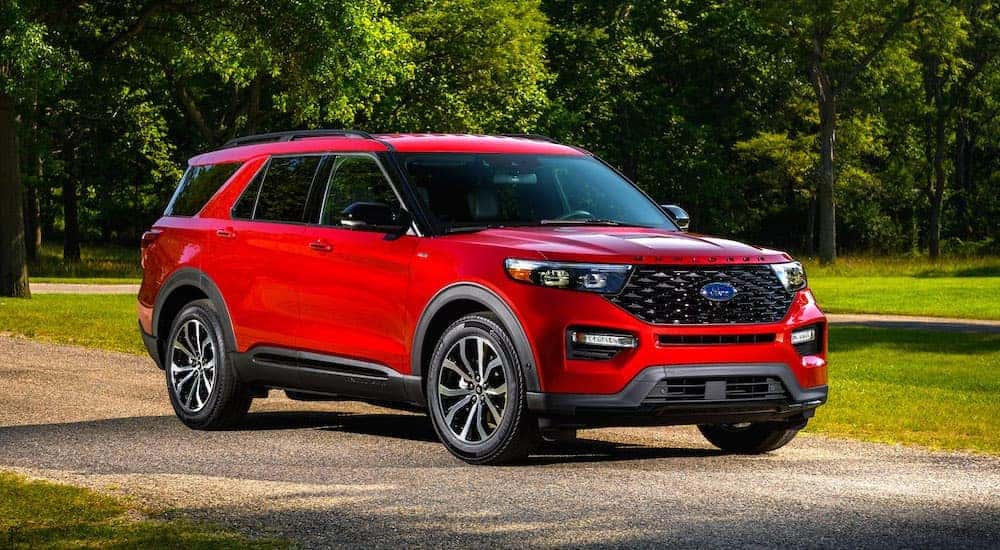
By 2011, the SUV boom was in full swing, and it didn't take long for Ford to demonstrate that it was ready, willing, and able to set an example for other manufacturers in the industry. As the flagship SUV of the Ford fleet, the redesigned fifth-generation Explorer was given access to a host of features that have since become commonplace among many different brands.Blind Spot Information System & Rear Cross Traffic Alert
While much has changed in the past century regarding the automobile and its various amenities and features, visibility has remained one of, if not the most important, items to pay attention to whenever you’re on the road. A common area where additional assistance is appreciated is watching for traffic that might be absent from our line of sight. Ford's Blind Spot Information System and Rear Cross Traffic Alert technology issue a warning to the driver in such a situation.Collision Warning & Brake Support
Reaction time is an essential skill that comes from experience. Knowing what to do when there is the potential for a collision separates an accident from a close call. Collision Warning relies on cameras and radar to issue an alert when an accident is imminent. Sometimes, driver fatigue and a brief distraction can be the prelude to a collision. Brake Support works with Collision Warning, providing the necessary assistance in slowing down the vehicle and bringing it to a complete stop. These features are all but standard these days, but were revolutionary when they appeared on the 2011 Explorer.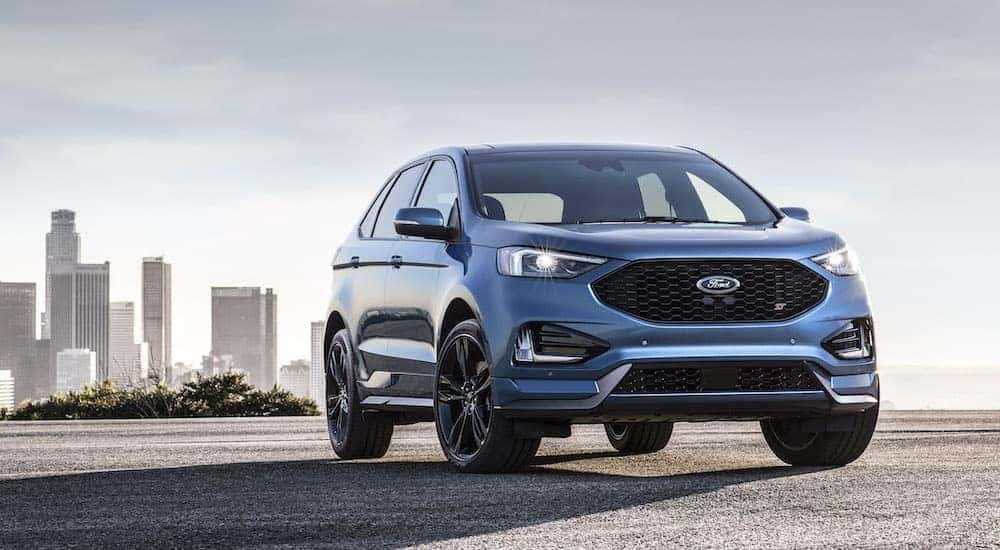
Ford Is My Co-Pilot…
Ford's advancements were impressive and were a prime indication of how far the brand would go to ensure its passengers were safe, particularly those who chose from its wide range of SUVs. The 2019 Ford Edge introduced one of the most significant leaps forward regarding safety and driving assistance technology with the advent of the Ford Co-Pilot360 suite. Building on some of the features Ford had developed in previous years, drivers now have more assistance than ever before. They can utilize these technologies for a wide variety of different applications.Lane-Keeping System
One of the significant causes of road accidents has little to do with reckless driving and more to do with driver fatigue and drowsiness. Ford’s Lane-Keeping System detects your position and ensures you’re not drifting in and out of your lane by vibrating the steering wheel and then providing mild steering inputs to keep you in your lane. If you drift repeatedly, it will suggest you pull over and take a break.Evasive Steering Assist
Implementing the proper steering techniques is another part of the reaction time that a driver develops through experience. Ford’s Evasive Steering Assist alerts you when a stopped vehicle is directly in your path and provides additional steering assistance to avoid the object in front of you. It won't steer for you, but it will help you avoid dangers in your path.Rear View Camera
Earlier, we mentioned the importance of visibility and how thoroughly understanding your surroundings is imperative for safe driving. Your Rear View Camera will engage when you’re in reverse and grant you additional visibility whenever you’re backing up.Hill Descent Control
When the SUV was first designed, its most common uses were off-roading and various outdoor adventures. Hill Descent Control will be invaluable if you plan to utilize your Ford SUV for just such a purpose. By automatically applying additional brake pressure to maintain a constant speed, you can be sure that coming down from any mountaintop will be a safe experience.Adaptive Cruise Control
Adaptive Cruise Control may be one of the best features if you drive a lot on highways. There’s an excellent chance that you’re already familiar with cruise control, the system that allows your vehicle to run at a predetermined speed to eliminate the need for constant pressure on the accelerator. Adaptive Cruise Control takes this technology one step further. By monitoring the vehicle ahead of you, it can adjust your speed automatically to maintain a safe following distance without any driver input.